
DevSec Global designed and deployed a Cloudflare-native security analytics and AI reporting system that transforms raw edge security data into structured, actionable intelligence.
The objective was to eliminate blind spots in WAF, bot mitigation, and rate-limiting environments by ingesting Cloudflare logs, enriching them with metadata, and applying AI-driven analysis to identify attack patterns, rule inefficiencies, and emerging threats.
Instead of relying solely on dashboard-level visibility, the system converts security telemetry into decision-ready insights for engineering, security, and executive teams.
The Challenge
Organizations running on Cloudflare often face a structural limitation:
High volumes of raw security events
Limited contextual aggregation
Reactive rule tuning
Poor executive visibility
Manual RayID investigations
Disconnected WAF tuning cycles
Typical issues included:
False positives affecting legitimate traffic
Repeated attack vectors resurfacing
Difficulty identifying ASN-level abuse trends
Inconsistent bot mitigation effectiveness
Lack of structured reporting for stakeholders
Security data existed — but it was not operationalized.
Specific challenges:
1. Data Fragmentation
Cloudflare logs contain valuable fields:
Ray ID
ASN
IP reputation
Bot score
Rule ID triggered
Country
Path targeted
HTTP method
However:
Data is event-based, not insight-based
No automated clustering of attack patterns
No trend analysis across time windows
No AI-based summarization
2. Manual Incident Investigation
Without automation:
Analysts manually search logs
RayIDs are investigated individually
No automated grouping by attack signature
No predictive signal extraction
This results in:
Slower mitigation cycles
Higher operational overhead
Reduced clarity for CTO-level reporting
3. Lack of Executive-Level Visibility
CTOs and stakeholders require:
Risk trend summaries
Top attack vectors
Geographic threat distribution
Cost impact estimations
False positive indicators
Most WAF dashboards are tactical, not strategic.
What did
Devsec Global did
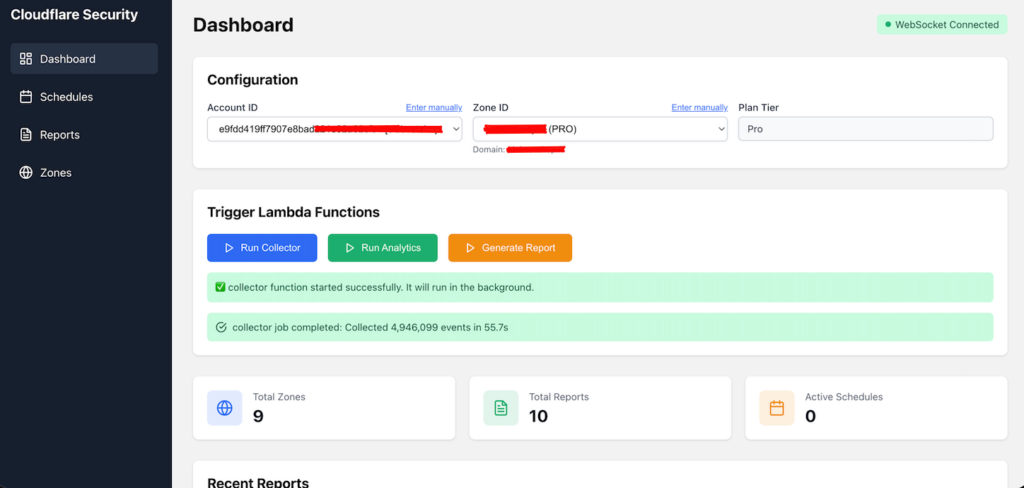
We engineered a Cloudflare-native intelligence layer that sits above traditional WAF and bot configurations.
Rather than adding more rules, we restructured how security telemetry is collected, interpreted, and acted upon.
1. Reframed Raw Logs into Structured Intelligence
Instead of reviewing isolated events, we built a system that:
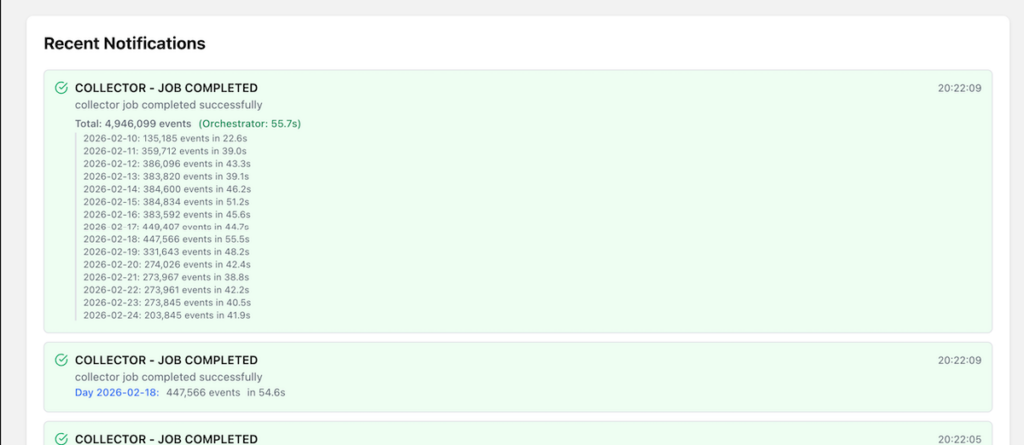
Aggregates distributed Cloudflare signals
Correlates rule triggers across time windows
Groups activity by behavioral similarity
Identifies recurring vectors beneath surface noise
The objective was to shift from event-level monitoring to pattern-level visibility.
2. Introduced Adaptive Signal Interpretation
We implemented a processing layer that evaluates:
Bot score anomalies
Repeated ASN behaviors
Endpoint pressure trends
Rule interaction conflicts
This layer does not simply report activity.
It classifies intent and prioritizes exposure.
3. Closed the Feedback Loop Between Detection and Action
Security configurations often drift because insight and enforcement are disconnected.
We established a structured feedback model that:
Flags inefficient rules
Surfaces false positive patterns
Highlights high-cost endpoints
Suggests mitigation refinement pathways
This reduced reactive adjustments and replaced them with governed iteration.
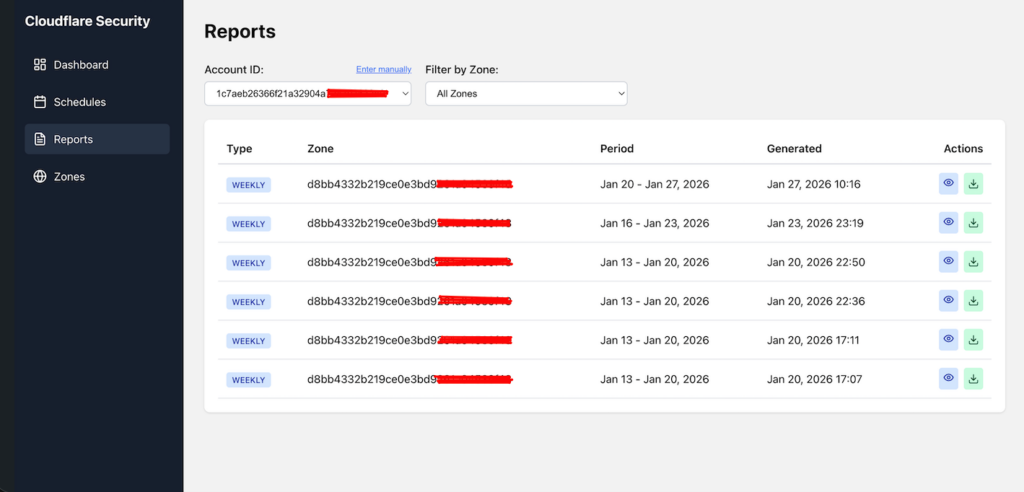
4. Created Executive-Level Security Visibility
Security data was transformed into:
Risk summaries
Trend-based reporting
Attack evolution mapping
Structured mitigation narratives
Stakeholders gained clarity without being exposed to raw log complexity.
The result was not another dashboard.
It was a controlled intelligence framework operating on top of Cloudflare—converting telemetry into strategic advantage while maintaining a minimal operational footprint.

The Final Results
- Centralized Cloudflare security telemetry into a unified intelligence layer
- Eliminated fragmented, manual RayID investigations
- Faster identification of inefficient or conflicting WAF rules
- Reduced false positive impact through pattern-based analysis
- Clear differentiation between noise and coordinated activity
- Data-backed justification for security decisions and configuration changes